Research Networks
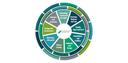
The nine Research Networks, which cover a broad range of topics and are strategically linked, replace the previous twelve research profile areas and will form the basis for the University of Bayreuth's scientific profile in the future. The Synergy Wheel serves to visualise the new Research Networks, providing an overview of the basic principles of the new research profile.
Technology, Society and Foresight
The Research Network Technology, Society and Foresight examines how different forms of knowledge, technologies, and societal visions of the future interdepend. At its core is the critical reflection of dominant scientific epistemologies, as well as the inclusion of marginalized aesthetic, transcultural and globally diverse forms of knowledge production. Technology, the natural sciences and technological innovations are not considered in isolation, but are connected with questions of responsibility, orientation, ethics, sustainability, and societal relevance. The network strengthens inter- and transdisciplinary research at the interfaces of society, culture, technology and the environment, with a focus on artificial intelligence, energy, knowledge and the future. Its aim is to open up new perspectives on responsible science, technology-driven transformations and a pluralistic vision of the future.
- Center for Mobile Learning with Digital Technology
- Center for Additive Innovations(in German language)
- Research Center for AI in Science and Society (RAIS²)
- Bayreuth Center for Law and Technology (Bayreuth LawTech)(in German language)
- Institute for Healthcare Management and Health Sciences (IMG)(in German language)
- Center for German and European Food Law(in German language)
- Institute of African Studies (IAS)
- Center for Mathematics & Science Education(in German language)
- Companies, Capital Markets & Taxes (CoCapT)(in German language)
- Center for Family Business(in German language)
- Bavarian Center for Battery Technology (BayBatt)
- Bayreuth Institute for American Studies (BIFAS)
- Bayreuth Center of Sport Science (BaySpo)
- Conflict, Crisis, and Change (C³) Research Center
Health, Sport and Food
The Research Network Health, Sport and Food links interdisciplinary research on health, sport, food systems, the environment, and societal transformation. At its core is a holistic analysis of the interactions between food, nutrition, physical activity, human health, and ecological conditions. The network combines perspectives from the natural sciences, life sciences, sport science, economics, law, social sciences, political science, and health sciences in order to address sustainable food production, resilient healthcare, prevention, and health-related innovations. Its particular strength lies in the close integration of basic and applied research, practice-based teaching, international cooperation, and transfer to society, business, and health practice. Its aim is to develop evidence-based solutions to major global challenges at the interface of health, nutrition, sport, and the environment.
- Research Center for AI in Science and Society (RAIS²)
- Institute for Healthcare Management and Health Sciences (IMG)(in German language)
- Center for German and European Food Law(in German language)
- Institute of African Studies (IAS)
- North Bavarian Center for NMR-Spectroscopy (NMR-Center)
- Research Unit for Food Quality
- Bayreuth Center of Sport Science (BaySpo)
Translations and Conflicts
The Research Network Translations and Conflicts examines conflicts and processes of political change, as well as practices of translation. Translation mediates between languages, cultures, disciplines, academic styles and social fields, but also between different political ideologies, cultures of remembrance and experiences of violence. This influences – and is influenced by – conflicts over power relations, resources, inequalities, and visions of peace and the future. The network brings together perspectives from multilingualism research, the ethics of dialogue, peace and conflict studies, sociology, social and cultural anthropology, geography, political science, history and media studies. It thereby strengthens and links inter- and transdisciplinary research on interculturality, global interconnectedness and social understanding in contexts of difference and friction, as well as research on conflicts and processes of social change. Its aim is to establish translation as a key scientific, political and societal competence for the productive negotiation of conflicts.
Materials and Energy
The Research Network Materials and Energy joins research on structured functional materials, innovative materials, and energy-relevant technologies. Its focus is on materials for energy conversion, energy storage, catalysis, hydrogen cycles, energy harvesting, and applications under simulated and real operating conditions. Through the close integration of chemistry, physics, engineering, materials science, and data-driven approaches, the network develops new solutions for sustainable energy and materials systems. It links basic research, high-tech analytics, industrial cooperation, research-oriented teaching, and knowledge transfer with questions of raw material availability, circularity, and societal acceptance. Its aim is to develop high-performance, readily available and sustainable materials as the key to a sustainable energy supply and technological change.
- Center for Additive Innovations(in German language)
- Keylab Glass Technology
- Bayreuth Institute for Macromolecular Research (BIMF)
- Research Center for AI in Science and Society (RAIS²)
- Bayreuth Center for High Performance Computing (BZHPC)
- DFG-Priority Programme SPP 2370 Nitroconversion
- Bayreuth Center for Manterial Science and Engineering (BayMAT)
- North Bavarian Center for NMR-Spectroscopy (NMR-Center)
- Bavarian Center for Battery Technology (BayBatt)
- SFB 1585 MultiTrans
- IGRK 3194 [MB]² Multidimensional Biomaterials
- Bayreuth Center for Molecular Biosciences (BZMB)(in German language)
African Studies
The Research Network African Studies reflects the African continent as an active co-creator of global cultural, political, economic, social and ecological processes. At its core is a perspective that does not consider Africa in isolation, but analyses global entanglements from African and Afro-diasporic perspectives. The network connects almost all faculties and disciplinary cultures and brings together long-standing, prolific, internationally visible research, teaching and cooperation on an equal footing. A particular strength lies in combining approaches from the humanities, social sciences, law, economics, natural sciences, and environmental sciences to analyze Africa-world relations. Its aim is to understand the global past, present and future in a more nuanced way and to overcome stereotypical views through multi-perspective and partnership-based research.
Molecules, Life and AI
The Research Network Molecules, Life, and AI combines life sciences, physics, engineering and artificial intelligence in order to better understand living systems from the molecular to the organismic level and to make them usable in targeted ways. Its focus is on structural and dynamic processes in biological matter, their interactions with the environment, health, nutrition, and technology, and their quantitative, data-based and AI-supported modeling. AI methods are not only applied, but are also critically developed further with regard to explainability, validity, and societal benefit. The network brings together basic research, high-end analytics, bioinformatics, biofabrication, medically relevant research and application-oriented innovations in close interdisciplinary collaboration. Its aim is to generate verifiable and responsible insights into living systems and to derive solutions for health, the environment, nutrition, and biotechnological applications.
- Research Center for AI in Science and Society (RAIS²)
- Bayreuth Center for High Performance Computing (BZHPC)
- CRC/TRR 225 From the Fundamentals of Biofabrication towards Functional Tissue Models
- North Bavarian Center for NMR-Spectroscopy (NMR-Center)
- Bavarian Center for Battery Technology (BayBatt)
- IGRK 3194 [MB]² Multidimensional Biomaterials
- Research Unit for Food Quality
- Bayreuth Center for Molecular Biosciences (BZMB)(in German language)
- Research Unit FOR 6037 "Multi-subunit RNA polymerases across all domains of life: Mechanisms underlying transcriptions activity and regulation."
Ecology and Environment
The Research Network Ecology and Environment links interdisciplinary research on organisms, ecosystems, biodiversity and environmental change at local, regional and global levels. Its focus is on the causes, dynamics and consequences of global change, as well as the protection and sustainable use of terrestrial and aquatic habitats and resources. The network combines ecological basic research with applied perspectives from environmental law, environmental informatics, environmental technologies, plant breeding, sustainability, and health research. Through shared infrastructures, coordinated research programs, international networking, and research-based teaching, ecological processes are analyzed from multiple perspectives and translated into socially relevant fields of action. Its aim is to develop scientifically grounded solutions to biodiversity loss, climate change, environmental pollution, and sustainable human-environment relations.
- Center for Additive Innovations(in German language)
- Keylab Glass Technology
- Center for German & European Energy Law (FER)(in German language)
- Bayreuth Center for High Performance Computing (BZHPC)
- Institute for Healthcare Management and Health Sciences (IMG)(in German language)
- Center for Law of Sustainable Development (FoRNE)(in German language)
- Bayreuth Center for Ecology and Environmental Research (BayCEER)
- Limnological Research Station
- Institute of African Studies (IAS)
- Bayreuth Center for Stable Isotope Research in Ecology and Biogeochemistry (BayCenSI)
- Center for Mathematics & Science Education(in German language)
- Geography Department
- North Bavarian Center for NMR-Spectroscopy (NMR-Center)
- Bavarian Center for Battery Technology (BayBatt)
- Bayreuth Institute for American Studies (BIFAS)
- Bayreuth Center of Sport Science (BaySpo)
- CRC 1357 Microplastics
Polymers and Interfaces
The Research Network Polymers and Interfaces weds cutting-edge research on polymers, colloids, macromolecules, nanostructures, and interfaces. Its focus is on the interdisciplinary integration of chemistry, physics, engineering and computer science in order to understand and specifically design the structure, dynamics, function and applications of complex materials, making collaborative use of experiments, simulations and data. The network addresses key future topics such as sustainable materials, the circular economy, additive manufacturing, lightweight construction, biofabrication, medical technology, clean air, thermal management, and microplastics. Its strength lies in the close integration of basic research, high-tech infrastructure, international cooperation, industry links, and research-based teaching. Its aim is to develop innovative polymer and interface materials with high scientific, technological and societal relevance.
- Bayreuth Institute for Macromolecular Research (BIMF)
- DFG-Priority Programme SPP 2370 Nitroconversion
- Bayreuth Center for Material Science and Engineering (BayMAT)
- CRC/TRR 225 From the Fundamentals of Biofabrication towards Functional Tissue models
- North Bavarian Center for NMR-Spectroscopy (NMR-Center)
- Bavarian Center for Battery Technology (BayBatt)
- CRC 1585 MultiTrans
- IGRK 3194 [MB]² Multidimensional Biomaterials
- Bayreuth Center for Molecular Biosciences (BZMB)(in German language)
- CRC 1357 Microplastics
Economy, Business and Law
The Research Network Economy, Business and Law fosters the close interdisciplinary collaboration of law and economics/business studies. At its core are legal frameworks, economic courses of action, market dynamics, entrepreneurial activities and societal orders and how they shape one another. The network combines joint research in research centers, publications and innovative study programs into a distinctive focus in business law and its broader areas of application. Its particular strength lies in combining legal, economic and management perspectives on regulation, consumer protection, corporate practice, and economic transformation. Its aim is to understand the interactions between law and the economy on a sound scientific basis and to develop practice-oriented solutions to complex economic and socio-political challenges.
- Research Center for Fundamental Rights
- Center for German & European Energy Law (FER)(in German language)
- Bayreuth Center for Law and Technology (Bayreuth LawTech)(in German language)
- Institute for Banking Law & Policy(in German language)
- Center for Law of Sustainable Development (FoRNE)(in German language)
- Center for German & European Food Law(in German language)
- Institute of African Studies(IAS)
- Companies, Capital Markets & Taxes (CoCapT)(in German language)
- Center for Family Business(in German language)
- Bavarian Center for Battery Technology (BayBatt)
- Research Group FOR 5918 IDoL
- Bayreuth Center of Sport Science (BaySpo)