Hospitals face the impacts of climate change on multiple fronts. They must care for patients suffering from heat-related illnesses, extreme weather events and emerging infectious disease risks, while ensuring the resilience of their own operations despite climate-related hazards. At the same time, they are expected to reduce their own resource consumption and greenhouse gas emissions. To date, Germany lacks a standardised, scientifically robust framework for systematically assessing and comparing climate mitigation and adaptation efforts in hospitals and for deriving concrete development goals. The KlimaRadar Krankenhaus project, coordinated by the University of Bayreuth, will therefore develop a practical maturity model designed to provide hospitals, health insurers and policymakers with evidence-based guidance for transformation, investment and governance decisions.
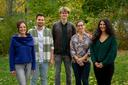
The project brings together the University of Bayreuth, the Institute for Applied Health Services Research (INAV), the German Hospital Institute (DKI), and the Competence Centre for Climate-Resilient Medicine and Healthcare Facilities (KliMeG) of the German Alliance on Climate Change and Health (KLUG). The University of Bayreuth, under the leadership of Prof. Dr. Wilm Quentin (Planetary and Public Health research group) serves as consortium coordinator and is responsible for the sub-project “Climate Adaptation – Evidence Base & Institutionalisation”. This work package will establish the scientific evidence base for climate adaptation measures in hospitals, develop practical recommendations, and examine how such measures can be sustainably embedded within hospital structures.
The project will begin by analysing national and international best practices. Building on these findings, recommendations for action will be developed in collaboration with experts and partners from the field. The KlimaRadar tool will first be piloted in up to five hospitals and subsequently validated in up to 15 hospitals of varying sizes, ownership structures and levels of care. The result will be a consolidated maturity model, accompanied by recommendations for action and health policy implications aimed at the long-term institutionalisation of the KlimaRadar approach.
The project will commence in January 2027 and will be funded for 36 months through the Innovation Fund of the Innovation Committee at the Federal Joint Committee (G-BA). The approved funding amounts to approximately €1.6 million.