University of Bayreuth, Press Release No. 109/2025 – 09 December 2025
New Study Reveals Limitations of AI-Based Material Prediction
Computer simulations and artificial intelligence often make significant errors when predicting the properties of new, high-performance materials. This is the finding of an international study led by the University of Bayreuth. In their research, published in the renowned journal Advanced Materials, the scientists provide tools to address this issue.
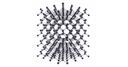
Graphical representation of the diamond crystal structure. Natural deviations from ideal crystal structures are often overlooked by AI applications, which can lead to significant errors in predicting suitable new materials. © Adobe Stock/Molecular Science
Why it matters
Many devices we use daily—such as smartphone batteries or solar panels on our rooftops—rely on highly optimized materials. In light of societal challenges like climate change, there is a strong demand for new technologies and materials. However, discovering new materials is difficult because experimental development can be time- and resource-intensive. In recent years, major progress has been made in the search for new materials using computer simulations and artificial intelligence. Yet, the new study led by the University of Bayreuth has uncovered serious errors in AI predictions of material properties, which can significantly affect experimental applications. The researchers provide tools and methods to improve the efficiency and reliability of computer-assisted material discovery.
Identifying new technological materials among the vast number of possible combinations of elements and structural arrangements is a major challenge in materials science. Experimentally, this search is often limited by the complexity and cost of synthesising and analysing promising candidates. As a result, the use of computer simulations for material discovery has become increasingly attractive in recent years. Particularly in the field of crystalline materials, substantial progress has been achieved. This class of materials, which includes many important compounds such as silicon, steel, and diamond, features atoms arranged in highly regular lattices. However, current computational workflows are based on idealised crystal structures that do not accurately reflect experimental reality. In particular, they ignore crystallographic disorder, which is common in real materials. For example, many crystalline materials contain similar elements that are “mixed” within their lattice—a phenomenon known as substitutional disorder. When information about this disorder is missing or not properly considered, AI or simulation methods make errors in predicting the properties of such materials.
An international research team comprising scientists from the Theory Department at the Fritz Haber Institute, Imperial College London, and the University of Bayreuth—led by Prof. Dr Johannes T. Margraf, Chair of Physical Chemistry V at the University of Bayreuth—has now developed a machine-learning tool that can reliably detect such disordered materials. “With this tool, we can predict whether a crystal is affected by such disorder and steer material discovery towards computationally well-represented areas,” says Konstantin Jakob, first author of the study and research associate at the Fritz Haber Institute.
Using the new model, the team screened databases containing materials previously identified as promising by computer simulations. In all cases, the researchers found that a significant proportion of these predictions are likely to exhibit disorder in experiments—in one instance, more than 80% of the proposed materials were affected. This means that the vast majority of materials found in this database could have markedly different properties in practice than predicted.
“Our study shows that disorder can be a critical stumbling block in computational materials science if it is not accounted for in simulations. Fortunately, with the tools we provide, disordered materials can be detected even in large-scale workflows and addressed using the appropriate computational methods,” says Prof. Margraf. In future, this tool will significantly enhance both the reliability and efficiency of computer-assisted material discovery.
Source: Konstantin S. Jakob, Aron Walsh, Karsten Reuter, and Johannes T. Margraf. Learning Crystallographic Disorder: Bridging Prediction and Experiment in Materials Discovery. Advanced Materials (2025)

Prof. Dr. Johannes MargrafChair of Physical Chemistry V - Theory and Maschine Learning
Phone: +49 (0)921 / 55-4970
E-mail: johannes.margraf@uni-bayreuth.de

Theresa HübnerDeputy Press & PR Manager
University of Bayreuth
University of Bayreuth
Phone: +49 (0)921 / 55-5357
E-mail: pressestelle@uni-bayreuth.de