Rising water temperatures due to climate change accelerate many biological processes: e.g. algae grow earlier and more intensively, microorganisms break down organic matter more rapidly, and nitrogen is converted and thus consumed more quickly. The typical summer stratification of lakes – warm surface water and cold deep water – also begins earlier with increasing temperatures and lasts longer. This results in very limited exchange between surface and deep water, causing phosphorus to accumulate in deeper layers while oxygen no longer reaches the lower parts of the lake.
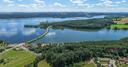
In their study, the research team led by Prof. Dr. Stefan Peiffer at the Hydrology research group, Bayreuth Centre of Ecology and Environmental Research (BAYCEER), analysed an extensive dataset covering 19 years (2000–2019). They examined water temperature, stratification duration, nutrient composition and oxygen content in four Franconian reservoirs: the shallow Altmühlsee and the three deep, interconnected Brombach reservoirs.
“The data show a significant increase in water temperature of up to one degree Celsius per decade as well as an increase in stratification duration of up to eighteen days per decade. The duration of oxygen depletion also rose by up to thirty-five days per decade,” says Peiffer. In all lakes, nitrogen concentrations decreased, whereas phosphorus concentrations increased. This altered nitrogen‑phosphorus ratio raises the risk of harmful blue-green algal blooms: algae require both nutrients to grow, so decreasing nitrogen levels in the water would normally limit algal growth. However, blue-green algae can fix atmospheric nitrogen and use it for growth. When nitrogen becomes scarce in the water, they gain a competitive advantage and proliferate more strongly than other species.
“For the first time, we have been able to show using real long-term data that increased water temperatures due to climate change lead to a higher risk of harmful blue-green algal blooms as a result of changes in stratification dynamics and enhanced internal phosphorus load from lake sediments. Our findings therefore highlight the urgent need to consider the impacts of climate change on the health and restoration of lakes worldwide, especially given that climate change is expected to intensify over the coming decades,” says Peiffer.
The study was conducted in close cooperation with the Ansbach Water Management Authority, which provided the long-term monitoring data. It was funded through the EU Horizon 2020 Programme with a Marie Skłodowska-Curie Grant (813438).