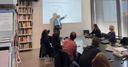
The project runs from March to September 2026 and is closely integrated into the development of a joint digital and AI strategy for the Bavarian state museums and collections, which is being advanced by a digital curator of the state museums. Within this project, the University of Bayreuth is responsible for both leadership and implementation, ranging from the identification of potential use cases to the evaluation of prototypes. At the start of the project, several user-centred workshops were conducted in an initial phase together with representatives of the participating museums. The aim of this kick-off phase was to develop a shared understanding of the specific challenges faced by museums, as well as of the potential and limitations of AI, and, based on this, to identify initial fields of application.
The workshops were based on a prior analysis of international best-practice examples and current technological developments. Building on this, numerous ideas were developed across the core museum functions, from collecting and cataloguing to preservation and scholarly research, as well as education and visitor interaction.
The approaches identified to date illustrate the wide range of possible application scenarios within the museum context. These include AI-supported analysis and cleaning of collection data, automated tagging of objects based on image and text data, personalised educational offers and digital tours, as well as support in responding to visitor enquiries.
“The successful start with the workshops highlights the considerable interest in and potential for the use of AI in museums,” explains Prof. Dr. Torsten Eymann, Chair of Information Systems and Digital Society at the University of Bayreuth. “Particularly in handling large and heterogeneous data sets, new opportunities are opening up for museum work.”
As the project progresses, the identified application areas will be further specified and subjected to a systematic techno-economic evaluation. The aim is to select those approaches that are technically feasible, economically viable, and especially valuable for museum practice. These will then be implemented as prototypes and tested within museum operations.
Looking beyond the participating institutions, the project aims to generate momentum for the entire Bavarian museum landscape. It is hoped that the approaches and prototypes developed in the project will serve as guidance and a blueprint for other museums, enabling them to implement AI in a structured, practical, and needs-based manner.