
Archive
News from science communication in recent years.
Participatory formats of NS remembrance have an effect
How can the memory of National Socialist crimes be kept alive? Many memorials, museums and archives rely on participatory and digital formats to reach more people, especially younger people. However, until now there has been a lack of scientific findings on their impact. A new study by researchers from the Social Science Research Center Berlin (WZB) and the Hertie School in collaboration with the Arolsen Archives shows for the first time that active remembrance work motivates participants to get involved in remembrance work and an open society beyond the specific project.
The picture was taken in the former German National Socialist concentration and extermination camp Auschwitz-Birkenau
Marie Sjödin / Pixabay
In two randomized studies with around 1,500 participants, the researchers compared the effect of active remembrance work with pure information dissemination. The study focused on the #everynamecounts project, a digital crowdsourcing project run by the Arolsen Archives, in which volunteers digitize historical documents on the persecution of various groups during the Nazi era. Half of the participants actively took part in this project and digitized maps of prisoners of the Buchenwald concentration camp. The other group only received information about Nazi persecution and the archived documents (Study 1) or no information at all (Study 2). The groups were then interviewed.
Confidence in your own effectiveness
The results are clear: after the project, the participants in the active group were more motivated to get involved in memorial projects and were also willing to donate more on average. They also stated that they wanted to campaign against discrimination and for human rights - their willingness to join an initiative or sign a petition against anti-Semitism was particularly high. According to a report by Informationsdienst Wissenschaft (idw), the study shows that participatory remembrance work strengthens people's confidence in their own ability to act - possibly the decisive difference between participatory remembrance work and pure information dissemination. After the end of the project, participants from the active group were more likely to agree with the statements that they can contribute to keeping the Nazi crimes in memory and thus make an important contribution to a future without hatred and exclusion. “Our results demonstrate the potential of participatory approaches compared to traditional methods that focus purely on conveying information,” says study coordinator Ruth Ditlmann from the Hertie School. “They strengthen people's confidence in their own effectiveness - a key driver of civic engagement.
The study also shows that actively engaging with Nazi crimes can also raise awareness of other historical injustices, such as colonial crimes. Participants were subsequently more motivated to commemorate the victims of German colonialism or to support archives that document these injustices. “This contrasts, at least on an individual level, with the assumption that remembrance work is a zero-sum game in which different commemorative events compete for attention,” says WZB researcher Berenike Firestone. Floriane Azoulay, Director of the Arolsen Archives, emphasizes: “The active and low-threshold involvement of people in digital remembrance projects is extremely important to us. The study now even shows that when people get involved in #everynamecounts, collective and effective remembrance work is created that was previously not possible in this form - personally and at the same time globally connected and in exchange with others.”
Infos
The study “Participating in a Digital-History Project Mobilizes People for Symbolic Justice and Better Intergroup Relations Today” by Ruth Ditlmann, Berenike Firestone and Oguzhan Turkoglu has been published in the journal Psychological Science.
The study was funded by the Volkswagen Foundation.
Scientific contact: Dr. Berenike Firestone, Department Transformations of Democracy
Original publication: Participating in a Digital-History Project Mobilizes People for Symbolic Justice and Better Intergroup Relations Today - Ruth Ditlmann, Berenike Firestone, Oguzhan Turkoglu, 2025
Further Information: International center on the Nazi era - Arolsen Archives and #everynamecounts – Digital memorial for victims of National Socialism!
05.05.25
Award-winning “Flexi-Nuggets”: Bremerhaven University of Applied Sciences team serves up winning product 2025 and represents Germany at ECOTROPHELIA
The student team from Bremerhaven University of Applied Sciences wins this year's TROPHELIA competition with its “Flexi-Nuggets” product idea. The ideas competition is aimed at food science students and was organized for the 16th time by the Forschungskreis der Ernährungsindustrie e. V. (FEI).

The “Flexi-Nuggets”, which were developed by students at Bremerhaven University of Applied Sciences, not only look delicious, they are also supposed to taste good.
Michaele Wohlleber
“Flexi-Nuggets” stand for innovative foods that combine sustainability and enjoyment. According to a report by Informationsdienst Wissenschaft (idw), they were developed by three food technology students at Bremerhaven University of Applied Sciences. With just two ingredients, they offer a unique solution for conscious meat consumption: 50 percent tender chicken breast meat from brother chickens and 50 percent protein-rich white beans. Even the golden, crispy breading is made from 100% white beans - for a completely natural treat.
The team convinced the TROPHELIA jury “across the board, as the golden-crispy nuggets are ideal for anyone who wants to reduce their meat consumption without compromising on taste”, the press release continues. The focus is on the selection of ingredients in order to completely avoid additives, colorants and flavor enhancers.
“Once again this year, the teams have proven that they have not only applied a great deal of expertise to food, technology and ingredients, but also to difficult topics such as marketing, commercialization and upcycling,” says Martin Ammann, spokesperson for this year's TROPHELIA jury, reflecting their thoughts.
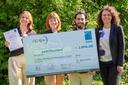
The winning team from Bremerhaven University of Applied Sciences: Franziska Diebel, Pauline Hoffmann and Yusuf Toprak with supervisor Prof. Dr. Ramona Bosse (from left)
Michaele Wohlleber
The winning team will represent Germany with “Flexi-Nuggets” at the European ECOTROPHELIA competition, which takes place on October 7/8 in Cologne. The team was supervised in the development and implementation of their idea by Prof. Dr. Ramona Bosse.
Second place went to the team from Ostwestfalen-Lippe University of Applied Sciences with “Mooreals”, a convenience crunchy muesli that combines health and ecological benefits. To obtain a wholesome muesli with whole milk, the Mooreals are simply mixed with water.
Another team from the Ostwestfalen-Lippe University of Applied Sciences took third place with “Cooliflower”, a vegan cauliflower-based ice cream praline in raspberry flavor. It is characterized by its innovative formulation and impressive nutritional profile - this convinced the jury to also award the development team with this year's special prize for the most innovative product idea.
Three other teams who presented their product ideas to the jury were recognized for their participation: “Bohnique”, a layered dessert based on the powerful field bean, by a team from the Karlsruhe Institute of Technology (KIT), “Sokara Chips”, a sustainable snack whose raw material Okara is a by-product of tofu and soy milk production, and “Algify”, an innovative vegan superfood drink powder that combines the power of microalgae with contemporary nutritional requirements - both developed by teams from the Technical University of Berlin. A total of 14 student teams from 5 universities had registered for TROPHELIA Germany to present their ideas for innovative food products with an ecological benefit. The best six teams were selected for the final, which took place on April 30, 2025 as part of the FEI Cooperation Forum in Bonn. The jury recognized the quality of this year's proposals as well as the high level of expertise and initiative of the teams: all product ideas were convincing in their eco-innovative properties and would already enrich the existing range today.
05.05.25
Protest, referendums and class action lawsuits put the brakes on wind energy expansion
The expansion of onshore wind energy plays a key role in supplying Germany with climate-friendly electricity. Local direct democratic procedures and lawsuits against wind turbines have contributed to a slowdown in the expansion of wind energy since 2018. This is the core topic of the hybrid lecture series in the research focus Energy, Environment & Sustainability at the FernUniversität Hagen. According to a report by Informationsdienst Wissenschaft (idw), the lecture brings together the specialist perspectives of political science, law and psychology in order to gain a better understanding of how protests, citizens' referendums and legal action against wind turbines arise and have an impact.
The speakers will report on their research in the joint BMWK-funded research project “Lawsuits and citizens' petitions as obstacles to wind energy expansion in Germany” at the research focus Energy/Environment/Sustainability. Interested parties can also take part in the (free) event online on Tuesday, May 13, 6 to 8 pm.
05.05.25
My friend, the (city) tree
Together with the Weihenstephan-Triesdorf University of Applied Sciences (HSWT) and the Technical University of Munich (TUM), BUND Naturschutz (BN) has created the citizen science project “ Mein Baum” (My Tree). The app was launched on April 25. This was reported by the Science Information Service (idw).

Urban trees play an important role in times of climate change. A (citizen) app is intended to help protect them.
IVORY Productions
Climate change has effects such as drought and therefore also threatens the existence of urban trees. However, these are important as they not only provide a habitat for numerous animals and plants, but also bind CO₂ and filter pollutants. According to Martin Geilhufe, BN state representative, in order to counteract this threat, we need to gain a better understanding of the condition and distribution of trees in urban areas.
With the help of the App „Mein Baum“, citizens can now also record various information about urban trees such as location, tree species, surroundings, root area, trunk or treetop, as well as document animals and fungi that live on the trees. The data is collected and analyzed. The data is not only used to answer scientific questions or develop protective measures, but can also be used for sustainable urban planning.
Citizens become active for the environment
Prof. Dr. Barbara Darr, Professor of Urban Forest Management at the Faculty of Forestry at Weihenstephan-Triesdorf University of Applied Sciences, emphasizes the advantage of active support from citizens to BUND Naturschutz: "Cities are facing challenges such as climate change and the loss of biodiversity. The ‘Mein Baum’ project combines research and citizen participation, enabling citizens to actively improve their urban environment."
Scientific supervision
Together with Prof. Dr.-Ing. Stephan Pauleit, Chair of Strategy and Management of Landscape Development (TUM), and Prof. Dr. Thomas Rötzer, Professor of Ecological Modeling (TUM), Darr has taken over the scientific supervision of the project.
Information about the app
Anyone who wants to get involved in “ Mein Baum” can download the free app and register once. The app also has a community area where users can exchange ideas or take part in activities such as watering trees during dry periods. Further information and statements can be found in the BUND Naturschutz press release: Bürgerinnen und Bürger schützen und erfassen Stadtbäume (in German language).
Scientific contact
Prof. Dr. Barbara Darr
University of Applied Sciences Weihenstephan-Triesdorf
Department of Forestry and Forestry Management
Further information
05.05.25
Tactics meets technology: software to revolutionize match analysis in soccer
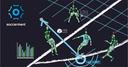
The graphic shows a professional match analysis as used in modern football.
® Institut für Trainingswissenschaft und Sportinformatik
Professional match analysis in soccer is usually reserved for the professionals. Professional clubs employ their own match analysis teams and use expensive analysis tools. Amateur footballers often cannot afford this and are left out. According to a report by Informationsdienst Wissenschaft (idw), the Cologne-based start-up N12 Tactics wants to close this gap. The team wants to facilitate access to professional match analysis with innovative software solutions. Thanks to artificial intelligence (AI) and machine learning (ML), tactical analysis should now be accessible to everyone. To this end, the Institute of Training Science and Sports Informatics has acquired EXIST funding of around 150,000 euros for one year, which is financed by Project Management Jülich (Sustainable Development and Innovation, Start-up, Transfer and Innovation Promotion) and Forschungszentrum Jülich GmbH. "Tactics are not only crucial for coaches, but also for players. Our software helps to take understanding the game to a new level," explains Prof. Dr. Daniel Memmert, Managing Director of the Institute of Training Science and Sports Informatics at the German Sport University Cologne. As the scientific mentor of the N12 Tactics team, he contributes his expertise from various current AI and ML projects funded by the German Research Foundation (DFG) to the project.
Real-time analysis
The start-up's two core products “Frames” and “Patterns” make it possible to automatically segment match scenes, analyze positioning and create tactical concepts interactively - whether on the pitch, in the dressing room or from the comfort of your own home. “Frames” allows coaches and analysts alike to analyze matches in real time and automatically highlight key moments. “Patterns”, on the other hand, is designed as the perfect complement for mobile devices to visualize tactics and make them directly accessible to the players: mobile, fast, user-friendly. Particularly innovative: the software automatically simulates movements of the opposing teams as well as the optimal goalkeeper positioning - “a unique function on the market to date”, emphasizes N12 Tactics.
These are the makers
Behind the project are Ryosuke Yano (M.A. Sport, Media and Communication Research, German Sport University Cologne), Erik Tabuchi Barczak (research assistant at the Karlsruhe Institute of Technology) and Gota Shirato (University of Bonn), who are contributing their many years of experience in soccer analysis, software development and AI to the start-up. The team is supported by the German Sport University Cologne, in particular by the “Transfer and Foundation” department, whose expertise in the field of innovation and foundation has contributed significantly to the successful acquisition of funds. “Without this valuable help, the project would not have been possible in this form,” emphasizes Daniel Memmert. With a growing social media community of over 700,000 followers and initial collaborations with international clubs, N12 Tactics hopes to play a decisive role in shaping the digital transformation of soccer. The project officially launches in May 2025.
A board of advisors supports the start-up team with content expertise and provides advice; the board consists of Prof. Dr. Daniel Memmert (Institute for Training Science and Sports Informatics, mentor), Hiroshi Miyazawa (coach of Mumbai City FC in India and former player of Sanfreece Hiroshima, Shonan Bellmare and JEF United Chiba in Japan) and Wynton Rufer (former soccer player of the New Zealand national team as well as Werder Bremen and 1. FC Kaiserslautern).
02.05.25
ESA's BIOMASS mission heralds a new era in global forest mapping
BIOMASS is the first satellite in space to use a powerful radar wavelength (P-band). This allows it to penetrate the entire forest canopy for the first time.
BIOMASS will create a detailed map of the biomass in the Earth's dense forests and thus monitor their condition and further development over five years.
Why this is important: Forests store huge amounts of carbon and thus mitigate the negative effects of man-made emissions on the climate. By knowing where and how much carbon is stored, scientists and governments can make better decisions on measures for nature conservation, climate adaptation and climate change mitigation, writes the German Science Information Service (idw).
The mission
According to idw, April 29, 2025 marks “a significant advance in the way we will see and understand our planet.” On this day, at 11:15 a.m. to be precise, the European Space Agency (ESA) successfully launched the BIOMASS satellite and put it into orbit. The launch took place from the European spaceport in Kourou, French Guiana, and marks the beginning of the world's first mission to put an innovative radar system, a P-band synthetic aperture radar (SAR), into space.
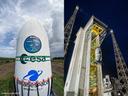
The pictures on the left show the BIOMASS satellite encapsulated in a rocket casing that protects it on its way through the Earth's atmosphere. The photo on the right shows the satellite on its way to the launch tower at the European spaceport in Kourou (French Guiana) to be attached to Arianespace's Vega-C rocket.
Stefan Kiryenko/ESA
The BIOMASS mission serves the global mapping and monitoring of our forests. It will record the structure of different forest types and provide data on above-ground biomass. The latter is an important indicator of the carbon stocks of terrestrial ecosystems and the basis for global climate protection measures. “With the successful launch of BIOMASS, we will look at tropical forests through a completely new lens. This is the first satellite with a P-band radar in space, which will allow us to look deeper into the canopy than ever before and thus determine the biomass and its changes much more precisely,” says Dr. Nuno Carvalhais, project manager of the BIOMASS project office at the Max Planck Institute for Biogeochemistry in Jena.
Forests play a key role in the global carbon cycle
Monitoring the amount of carbon stored in large and dense forests is of great importance, as these ecosystems provide a third of all photosynthesis on the land surface and store about half of the world's carbon in biomass. This corresponds to four times the annual global CO₂ emissions from anthropogenic activities. Tropical forests in particular are also invaluable for their biodiversity and ecosystem services. They stabilize the global climate and ensure human well-being.
However, tropical rainforests are increasingly vulnerable to climatic and human influences. This makes it all the more important to track the decline of forests due to deforestation and other disturbances, as well as changes in associated carbon emissions. Until now, it has been difficult to collect reliable data on global biomass, especially in the tropics, due to the limited capabilities of existing satellite technologies. BIOMASS closes this gap with a new level of detail and sensitivity.
Important findings for all parts of society
Mapping the different forest ecosystems will not only provide researchers, but also policy makers and conservationists around the world with important information to counteract increasing deforestation and support climate change adaptation measures. The measurements are essential to the global carbon budget and will feed into global climate models to inform policy frameworks such as the Paris Agreement, the Intergovernmental Panel on Climate Change (IPCC) and Reducing Emissions from Deforestation and Forest Degradation (REDD+) programs.
Freely accessible data for science
BIOMASS will orbit the Earth for at least five years, collecting freely accessible data for the scientific community, environmental organizations and governments, thereby also promoting international cooperation in climate and Earth system research. BIOMASS is a core component of ESA's Earth Explorer program and plays an important role in meeting international climate agreements.
The project office
The BIOMASS project office, based in Germany, supports the scientific community to realize the full potential of the mission. Coordinated by Dr. Nuno Carvalhais at the Max Planck Institute for Biogeochemistry (MPI-BGC), the project office acts as a central hub for scientific exchange, in collaboration with the Friedrich Schiller University Jena (FSU), the German Aerospace Center (DLR) and the Helmholtz Centre for Environmental Research (UFZ).
Training courses and workshops
In order to actively involve researchers and practitioners, the project office offers training courses, workshops and scientific events. These are designed to help make the best use of BIOMASS data to advance forest research, climate studies and ecological applications. By fostering a lively dialog between scientists, stakeholders and decision-makers, the BIOMASS project office ensures that the ground-breaking data from the mission also has an impact in the real world. The BIOMASS project office is financed by a contract from the German Space Agency DLR, with funding from the Federal Ministry of Economics and Climate Protection (BMWK).
Scientific contacts
Dr. Nuno Carvalhais
ncarvalhais@bgc-jena.mpg.deDr. Nicole Börner
nboerner@bgc-jena.mpg.deFurther information
28.04.25
Forest dieback in water protection areas: A threat to drinking water quality

Forest dieback in German water protection areas is leading to a deterioration in drinking water quality. A recent study by the University of Freiburg shows that the average nitrate concentrations in affected water protection areas have doubled, reports Informationsdienst Wissenschaft (idw). Forest dieback during the drought years from 2018 to 2020 poses a previously underestimated threat to drinking water quality in Germany. This is the result of an interdisciplinary study by the University of Freiburg, which was published in the journal Earth's Future. The research team investigated the nitrate concentrations in the groundwater of exemplary German water protection areas. In areas that had suffered significant forest loss, the average nitrate concentrations doubled.
“In Germany, 43 percent of water protection areas are forested, so the health of the forests is crucial for maintaining water quality,” explains Dr. Carolin Winter, lead author of the study and hydrologist at the Faculty of Environment and Natural Resources at the University of Freiburg. The researchers were able to show that within three years of the start of the 2018 drought, around five percent of the forest areas in water protection areas had died off. The impact on water quality varied greatly between the different areas. The researchers also warn of potential delayed effects that might only become apparent in the coming years.
Forest health is important for drinking water quality
It has long been known that forests act as natural guarantors of drinking water quality. The majority of drinking water in Germany comes from groundwater that is extracted in designated protected areas. Strict rules apply in these areas to minimize the risk of contamination. One of the aims is to prevent nitrate from entering the groundwater and making it unusable for the drinking water supply. Typical sources of nitrate are agriculture, cities and industry, while forests actively retain nitrate and thus protect the groundwater. However, the rapid death of trees can impair this protective function and turn forests themselves into a source of nitrate pollution.
Enormous forest loss in German water protection areas
By combining existing forest data with a comprehensive new mapping of all water protection areas in Germany, the researchers found that around 43 percent of water protection areas are forested. They were also able to show that five percent of these forest areas had died within three years of the start of the 2018 drought period. “This represents a high loss within a very short time, especially in view of the crucial importance for the water protection areas and the normal rotation period of tree species in Germany, which ranges from 60 to 160 years,” explains Dr. Florian Schnabel, last author of the study and forest scientist at the Faculty of Environment and Natural Resources. Forests with a high proportion of spruce were particularly affected, but tree species such as beech also recorded unusually high losses.
The scientists examined groundwater quality data from exemplary water protection areas that had suffered more than 25 percent forest loss. Their analyses showed that nitrate concentrations there had risen from an average of 5 milligrams per liter (in the period before the drought, 2008-2017) to 11 milligrams per liter (after the drought, 2021-2022). In areas with low forest loss of less than three percent, on the other hand, no increased nitrate levels were detected.
However, the timing and extent of the nitrate increase varied considerably and not all areas affected by severe forest dieback showed increased nitrate concentrations, idw continues. “The differences could be caused by different forest types or time lags between the forest loss and the measurable increase in nitrate levels,” explains Winter. “In some cases, the effects may only become visible after years or even decades.”
The authors emphasize that further research is needed to better understand the impact of forest dieback on water quality and to develop effective long-term protective measures.
Further Information:
Original publication: Winter, C., Müller, S., Kattenborn, T., Stahl, K., Szillat, K., Weiler, M., & Schnabel, F. (2025). Forest dieback in drinking water protection areas – a hidden threat to water quality. Earth’s Future. DOI: 10.1029/2025EF006078.
Dr. Carolin Winter is a hydrologist at the Faculty of Environment and Natural Resources at the University of Freiburg. Her research focuses on the dynamics of water quality under changing hydro-meteorological conditions and extreme events such as droughts and floods. Another focus of her work is on the effects of land use on water quality.
Dr. Florian Schnabel is a forest scientist at the Faculty of Environment and Natural Resources at the University of Freiburg. His research interests include the relationships between biodiversity and ecosystem functions of forests, sustainable forest management in the face of global change and the impact of climate extremes on forests. He is Associate Investigator of the Cluster of Excellence Initiative Future Forests.
28.04.25
Open knowledge for all: TU Berlin is helping to build Germany's Diamond Open Access future
Technische Universität Berlin is actively involved in the open access transformation. From May 2025, it will be involved with the publishing house BerlinUP in setting up the national service center for Diamond Open Access (SeDOA), which is funded by the German Research Foundation. Together with 14 other institutions, TU Berlin is committed to further developing and establishing the sustainable and free publication model of Diamond Open Access, according to a press release from Informationsdienst Wissenschaft (idw).
Strengthening open science
Scientific findings should be freely accessible and available without financial barriers. This is precisely where the SeDOA project comes in: the service center will act as a central platform to facilitate access to a sustainable, science-based publication culture for researchers, editors and institutions. The aim is to better network existing decentralized open access services and increase their efficiency.
BerlinUP contributes expertise
With BerlinUP, TU Berlin is contributing its expertise in the field of open access publications to the project. BerlinUP, the joint open access publishing house of the three Berlin universities - Free University of Berlin, Humboldt University of Berlin, Technische Universität Berlin and Charité - Berlin University of Medicine - offers innovative publication services and advice for researchers.
A network for the future of publishing
The consortium behind SeDOA comprises 15 academic institutions, coordinated by the University and State Library of Darmstadt, the University Library of Humboldt University of Berlin and the Max Weber Foundation in Bonn. Together, a national service point in the form of a “Diamond Capacity Center” will be created, which will also be networked at European level and strengthen international exchange. Jürgen Christof, Director of the TU Berlin University Library: “Diamond Open Access is a decisive step towards fair and sustainable scholarly communication. Our aim is to sustainably increase the visibility and use of this publication model. Together with our partners, we want to develop perspectives for the future of Open Access.”
Further information can be found on the website of the Service Center for Diamond Open Access (SeDOA) https://diamond-open-access.de/en/sedoa/
These 15 institutions support the establishment of the national service center for Diamond Open Access (SeDOA):
- University Library of the Free University of Berlin
- University Library of the Humboldt University of Berlin
- University Library of the Technische Universität Berlin
- Medical Library, Charité – Berlin University of Medicine
- Bielefeld University Library
- Max-Weber-Foundation Bonn
- Braunschweig University Library
- Darmstadt University and State Library
- Hamburg State and University Library
- Heidelberg University Library
- FIZ Karlsruhe – Leibniz Institute for Information Infrastructure
- ZBW – Leibniz Information Centre for Economics
- ZB MED – Information Centre for Life Sciences Cologne
- Fachhochschule Potsdam
- Herzog August Library Wolfenbüttel
26.04.25
Helmholtz KLIMA: New dialog platform
With the Helmholtz KLIMA Dialogue Platform, the Helmholtz Association has strengthened its commitment to climate communication and created an interface for climate-related issues between the 18 centers of the Helmholtz Association and politics. The aim of the platform is to identify ways to achieve climate neutrality and adapt to climate change.
With its activities, the Helmholtz KLIMA Dialogue Platform ties in with climate-relevant social and political debates, such as those recently conducted in the current coalition process. It identifies the appropriate research expertise for these debates from the 18 centers of the Helmholtz Association, whose interdisciplinary research closely links climate transformation with topics such as energy transition, transport transition, biodiversity, health, etc.
Helmholtz KLIMA uses dialog formats to bring scientists and political decision-makers into contact with one another in order to jointly develop solutions for the future. “In this way, we want to ensure that evidence-based findings from climate-relevant research flow even more strongly into political decision-making processes,” says Prof. Dr. Katja Matthes, Coordinator of the Helmholtz KLIMA Steering Board and Director of the GEOMAR Helmholtz Centre for Ocean Research Kiel.
As a Helmholtz-wide information and dialog portal for all aspects of climate-relevant research, Helmholtz KLIMA complements the Helmholtz Association's existing digital offering, reports Informationsdienst Wissenschaft e.V. In particular, the publicly accessible database on the website with profiles of scientists from the 18 Helmholtz Centers enables keyword-based searches for expertise for political institutions, editorial offices and civil society actors.
House of Commons debate
The Helmholtz Klima pilot event will take place on Tuesday, May 20, 2025 on the topic of “CO2 removal from the air: How do we clean up the atmosphere?” in the form of a public House of Commons debate in Berlin. Together with participants from science, politics, the media and civil society, we would like to reflect on the different methods of CO2 removal and discuss their potential and risks as well as their possible contribution to meeting climate protection targets in Germany.
Info: Helmholtz KLIMA (replaces the Helmholtz Climate Initiative since 2025 and works with a new team in Berlin) shows ways to climate neutrality and adaptation to climate change and is a dialog platform of the Helmholtz Association under the auspices of the GEOMAR Helmholtz Centre for Ocean Research Kiel.
24.04.25
“Planet Africa” on tour
The exhibition “Planet Africa - An Archaeological Journey Through Time” is making an international stop: after opening in Ghana and Eswatini, it will be on display at the Munich State Archaeological Collection from May 2025.
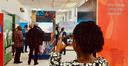
The Ghana exhibition was opened on March 27, 2025 in the specially built extension of the Archaeological Museum of the University of Ghana in Accra Legon.
Cornelia Kleinitz/ DAI KAAK
The “Planet Africa” exhibition tells the extraordinary story of Africa in six modules - from the first representatives of the Homo genus to technological innovations and early nutritional concepts. In Ghana, the exhibition was opened on March 27, 2025 in the specially built extension of the Archaeological Museum of the University of Ghana in Accra Legon. The opening was attended by representatives of the University of Ghana, the Ethiopian consul, the deputy ambassador of Algeria and the German ambassador Daniel Krull.
A significant milestone was also celebrated in Eswatini at the beginning of April: The Prime Minister, His Excellency Russell Mmiso Dlamini, officially opened the dual exhibition on San culture in Eswatini and “Planet Africa” at the Lobamba National Museum. With the support of the Embassy of the Federal Republic of Germany in Pretoria and the German Archaeological Institute (DAI), visitors can learn more about an important historical era in the kingdom itself, while also gaining an insight into the archaeology of the entire African continent.
Exhibition on a USB stick
For the exhibition concept in Africa, it quickly became clear that various reasons - such as enormous distances, logistical problems, different legal, linguistic and political circumstances - would make it impossible for the exhibition to travel physically. “Planet Africa” therefore focuses on stories rather than objects, using visual material, street art, graphics, texts and cinematics: ”This means that the exhibition content can be stored on digital media and conveniently travel to the location where it is to be shown. There it can be printed out and its films shown on screens. If necessary, the content can be adapted to local requirements and objects from our own collections can be added without having to cross customs or national borders,” explains Jörg Linstädter, Senior Director of the Commission for the Archaeology of Non-European Cultures at the DAI. Depending on the available space and financial resources, the exhibition can be shown at will, supplemented with local objects and at the same time always remain up to date.
One exhibition on two continents
While the exhibition will be set up separately at each location in Africa, “Planet Africa” will move from Berlin to Munich in May: On May 16, the exhibition will open to visitors at the Archaeological State Collection, where it will be on display until September 28, 2025.
Background to the research project
The DFG-funded priority program “Entangled Africa: Inner-African Relations between the Rainforest and the Mediterranean, ca. 6,000-500 years before today” will shed light on sub-Saharan Africa in 13 projects: The aim is to research and make visible intra-African relationships and networks of the last 6,000 years up to the beginning of the colonial era. Scientists at the DAI and leading universities in Berlin, Münster, Cologne and Frankfurt am Main are working in close cooperation with African colleagues. The exhibition is funded by the Federal Foreign Office of the Federal Republic of Germany, the German Research Foundation (DFG) and the National Museums in Berlin.
Scientific contacts:
PD Dr. Jörg Linstädter
Senior Director of the Commission for the Archaeology of Non-European Cultures at the DAI
Further information can be found at
24.04. 25
More colorful birds live in cities than in the countryside
New study by researchers from the University of Granada and the Max Planck Institute for Biological Intelligence
Researchers from the University of Granada and the Max Planck Institute for Biological Intelligence show that there is a link between urbanization and the plumage color of birds. Bird species that thrive in the city are less brown and have more striking colors in their plumage. This is probably due to the urban habitat structure (less forest), different background colors and the lower number of raptor species in the city. The study is based on data from more than 1200 bird species and is a vivid example of the impact urbanization can have on wildlife.
Urbanization has an enormous impact on the ecosystem and poses major challenges for animals and plants. Advancing urbanization worldwide is considered to be one of the main causes of the ongoing decline in biodiversity. A separate field of research, urban ecology, is dedicated to the question of what impact urbanization has on various organisms. For example, many studies have investigated how city noise affects the communication of birds. So far, however, we still know little about whether and how the color of animals is related to urbanization.
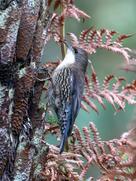
More at home in the great outdoors: brownish forest birds, such as the white-throated treecreeper (Cormobates leucophaeus) seen here, usually have a hard time in urban regions.
© MPI für biologische Intelligenz / Kaspar Delhey
Warmth and camouflage
Color fulfills numerous important functions in the animal kingdom: For example, it helps to keep animals warm or protect them from overheating (thermoregulation). It can also play a role in camouflage, mate selection and competition. In cities, it is generally warmer, there are fewer predators, but more artificial light and different background colors, for example due to concrete and asphalt. It is therefore quite conceivable that the urban environment has an influence on the coloration of animals. Under the leadership of Bart Kempenaers, researchers at the MPI for Biological Intelligence and the University of Granada got to the bottom of this issue. They used a global dataset with the abundance of over 1200 bird species in habitats with varying degrees of urbanization. The team combined this with data on plumage color and analyzed the extent to which the relative abundance of species in urban areas can be determined by color.
Are gray plumages more of a disadvantage in the city?
The study showed that the bird species that are successful in the city are less brown. “Shades of brown are more common in nature than in the city. We therefore assume that brown birds have disadvantages in a rather gray city. The predominant city colors and the lack of suitable habitats can therefore be decisive for which bird species do well there,” explains Kaspar Delhey, one of the two first authors of the study. In the city, there are also more bird species that have striking colors in their plumage - this is particularly true for females. Urban habitats therefore seem to favor more colourful bird species. This could be because there are fewer predators in urban areas and “being seen” is less of a risk than in the countryside.
Previous studies suggested that color diversity is lower among urban birds - but the team was able to show that the opposite is true. “There are fewer species in urban regions than in the countryside. If we take this into account in our analysis, the bird populations in the city actually have a greater variety of colors,” says Juan Diego Ibáñez-Álamo, first author of the study.
Rather inconspicuous in the city: the blue-eared honeyeater (Entomyzon cyanotis) has successfully colonized urban regions in Australia. Like many city-dwelling bird species, it is characterized by striking colors in its plumage.
© MPI für biologische Intelligenz / Kaspar Delhey
The study thus shows that successful urban birds differ in colour from those that do not cope in the city - urbanization and the colouring of birds are therefore linked. Future studies must now show whether this also applies to other animal groups.
Source: Science Information Service (IDW)
24.04. 25
Can the enjoyment of music be inherited?
An international team of scientists has investigated how genetic and environmental factors influence our enjoyment of music.
Does the ability to enjoy music have a biological basis? A study recently published in the journal Nature Communications shows that musical enjoyment is indeed partly hereditary. An international team led by scientists from the Max Planck Institutes for Psycholinguistics in Nijmegen, the Netherlands, and for Empirical Aesthetics (MPIEA) in Frankfurt am Main, Germany, investigated how genetic and environmental factors influence our enjoyment of music.

The ability to enjoy music is partly hereditary.
MPI für empirische Ästhetik / F. Bernoully
Music plays an important role in human emotions, social bonds and cultural interaction. But not everyone feels the same way. Why do some people enjoy music more than others, for example? “The answer to this question can give us an insight into more general aspects of the human mind - for example, how experiences become pleasures,” explains first author Giacomo Bignardi from the Max Planck Institute for Psycholinguistics. “We wanted to understand whether genetic differences between individuals lead to differences in music enjoyment and what these differences can tell us about musicality in general.”
Data from more than 9,000 twins examined
To find out whether genetic factors influence music enjoyment or the perception of reward from music, the team used a research design comparing the similarity between identical and fraternal twins: If identical twins are more similar than fraternal twins, genetics probably plays a role. In collaboration with the Karolinska Institute in Sweden, the researchers were able to use data from more than 9,000 twins, including information on the perception of reward through music and the ability to perceive musical characteristics such as pitch, melody and rhythm.
The results show that the ability to enjoy music is partly inherited: Using the twin design, the researchers were able to determine that 54 percent of the differences in the Swedish sample were genetic. The team also found that the genetic influences on the perception of musical reward are partly independent of musical perception skills and the general (non-musical) perception of reward. This means that differences in how rewarding we personally perceive musical enjoyment are also partly genetically determined and cannot be explained solely by individual differences in our general human reward system. In addition, the researchers discovered that different facets of music enjoyment are partly influenced by different genes, such as emotion regulation, dancing to the beat or making music with others.
“These results paint a complex picture. They show that our enjoyment of music does not depend exclusively on our ability to perceive musical sounds or to feel pleasure in general,” reports senior author Miriam Mosing from the MPIEA. “Rather, it seems that there are specific genetic and environmental factors that influence our musical perception.”
“Gertrud” is up and running
While the present study is based on data from Swedish twins, the MPIEA, in collaboration with the Max Planck Institute for Human Development in Berlin, recently launched the first national twin registry in Germany, called “Gertrud”. The aim of this initiative is to create a comprehensive resource in Germany for research into the interactions between genes and the environment that underlie individual differences. Twins who would like to contribute to scientific progress and participate in research studies are invited to register at www.gertrud.info.
Source: Information Service Science (IDW)
Anti-pluralist parties threaten academic freedom
The increasing influence of anti-pluralist parties often goes hand in hand with less academic freedom in the respective country. This is one of the findings of the current Academic Freedom Index (AFI), which will be published on March 13, 2025. Researchers at Friedrich-Alexander-Universität Erlangen-Nürnberg (FAU) publish the index annually in collaboration with colleagues from the V-Dem Institute at the University of Gothenburg. It covers 179 countries worldwide.
FAU/VDem
This year's Academic Freedom Index shows that eight of the countries included in the index have significantly higher academic freedom in 2024 than ten years ago, while scores have fallen in 34 countries or territories. Countries where the decline in academic freedom was statistically and substantially significant include several democracies, such as Argentina, Finland, Greece, Israel, Portugal and the United States, to name just a few examples. The decline in academic freedom was also measurable in Austria and Germany, but in both cases the decline remains small and is not yet substantially significant, according to the authors of the report. Although academic freedom is still much better protected in democracies than in autocracies, these examples illustrate that academic freedom can also come under pressure in democracies. This is why this year's Academic Freedom Index report focuses on countries where multiple parties are allowed to stand for election.
Electoral success of anti-pluralist parties as a factor
The AFI 2025 Update examines the electoral success of anti-pluralist parties as a plausible factor in the decline of academic freedom. The report's data covers a 50-year period and shows the following correlation: countries where anti-pluralist parties have little to no political influence tend to have high levels of academic freedom, while academic freedom typically declines where anti-pluralists are influential. The presence of anti-pluralist parties in the opposition hardly plays a role in a decline in academic freedom; academic freedom is more at risk where anti-pluralist parties become or are part of the government.
Spotlight: Argentina, Poland and the United States
FAU/VDem
Using three country examples - Argentina, Poland and the United States - the AFI Update shows how anti-pluralist parties undermine academic freedom once they are in power.
In all three cases, anti-pluralist politicians with government responsibility at national or state level used very similar methods to gain more control over science, in particular by restricting institutional autonomy or freedom of teaching and by cutting funding for research that contradicts the respective political vision. A particularly notable decline can be seen in Argentina, where the AFI score fell from a very high 0.97 to just 0.69 (on a scale of 0 to 1, low to high) within a year. The case of Poland, on the other hand, shows that the decline in academic freedom can also be halted if anti-pluralist parties lose power. Poland achieved a very high AFI score of 0.98 in 2014, i.e. before the parliamentary and presidential elections in 2015. In 2022, the country then reached a low point with an AFI score of 0.73. After the parliamentary elections in 2023, however, the country's academic freedom recovered again, reaching a score of 0.87 on the AFI scale.
Data basis
This year's update of the Academic Freedom Index is based on V-Dem version 15 data, which draws on assessments by 2,363 country experts worldwide. The data covers the period from 1900 to 2024. All data is publicly available and comprises a total of more than one million data points at coder level. The aggregated index is composed of five indicators: freedom of research and teaching, freedom of academic exchange and scholarly communication, institutional autonomy of universities, campus integrity and academic and cultural freedom of expression.
Open access and visualization
The data used for the AFI Update 2025 is freely accessible for further studies. The Academic Freedom Index website provides an interactive visualization of the data, country profiles and further information on the index project; the report itself is available at https://academic-freedom-index.net/research/Academic_Freedom_Index_Update_2025.p... . User-friendly graphic tools are also available to interested parties. These can be used by researchers, students or political decision-makers.
Will death be followed by digital survival?
Fraunhofer Institute for Secure Information Technology (SIT) presents study ‘Ethics, law and security of digital afterlife’
New technologies such as AI make it possible to live on after death in the form of digital representations (avatars) or chatbots. The digital afterlife industry, which offers such possibilities, is considered a promising growth market. An interdisciplinary research team from the Fraunhofer Institute for Secure Information Technology SIT and the University of Tübingen has developed design proposals for dealing with avatars and summarised them in the study ‘Ethics, law and security of digital afterlife’. The study can be downloaded free of charge here: www.sit.fraunhofer.de/edilife-studie (in German language).
According to a report by the Fraunhofer Institute for Secure Information Technology in Darmstadt published by Informationsdienst Wissenschaft (idw), many people want to leave something behind that will outlast their own death. Many bereaved wish to be able to speak to a deceased person again. Digital imitations of deceased persons promise to fulfil such longings. Examples range from the voice of a deceased grandmother speaking audio books, to chatbots that simulate written communication with a deceased person, to digital avatars that also imitate a person's appearance and gestures. Recent developments in the field of AI and virtual worlds suggest that avatars of deceased people will appear much more realistic in the future, both externally (voice, gestures) and in terms of behaviour. New digital technologies also allow increasingly realistic interactions between people and avatars.
Unanswered questions
This gives rise to many unresolved cultural, legal and technical questions: How can avatars be combined with reverence and mourning? How can the rights of the deceased be protected and how can the possibility of attacks and abuse be prevented? These and other questions are being investigated by researchers in computer science and law at Fraunhofer SIT and the International Centre for Ethics in the Sciences and Humanities IZEW at the University of Tübingen.
IT security and data protection in virtual worlds
First, the researchers analysed the changes in the culture of death, mourning and burial up to the emergence of the digital afterlife industry and (pop) cultural ideas. The second part deals with the current technical possibilities of creating digital human likenesses, as well as the protection and security of personal data required to create an avatar. Finally, the third part of the study deals with the legal view of digital survival, the obligations of service providers, the legality of data processing and possible threats to personal rights.
The study concludes with guiding principles and recommendations for dealing with avatars of digital survival: grieving people who use services for digital survival should receive special legal protection to protect them from abuse and exploitation in their exceptional emotional situation; transparency and explanation obligations should be introduced for commercial providers, especially with regard to data processing for the creation of a digital avatar. The researchers also recommend labelling avatars as such and limiting their scope of action. With this study, the researchers hope to contribute to ‘paving the way for the successful implementation of new digital practices in the context of death and remembrance’, according to the text.
About the study
The study was conducted as part of the joint project ‘Ethics, law and security of digital survival’ (Edilife) funded by the German Federal Ministry of Education and Research (BMBF) and led by the International Centre for Ethics in the Sciences and Humanities (IZEW) at the University of Tübingen with the involvement of the Fraunhofer Institute for Secure Information Technology SIT. The aim of the project was to analyse, evaluate and anticipate the opportunities and challenges of future social and technological developments
Fraunhofer IEM launches future podcast OUTATIME
Imagine this: Your AI avatar wakes you up and together you divide up the day's appointments between the two of you. Thought experiments like these are the starting point for the new podcast "OUTATIME - Visions. Technology. Future.", which can be heard on all common platforms from 11 February. The highlight: the hosts Prof Roman Dumitrescu and Tommy Falkowski are scientists at the Fraunhofer IEM (Paderborn). They put all visions to the test and invite you to think about the big questions of the future.
‘The future is a huge puzzle that has not yet been put together,’ says Prof Roman Dumitrescu, Director of Fraunhofer IEM and host of the podcast. ‘What seems like science fiction to us today could be reality tomorrow. That's why we spin groundbreaking visions that are nevertheless realistic. We want to inspire our listeners to think about the technologies that are changing our world - and consider how we can actively shape our future.’
Info: The OUTATIME podcast will be available on all popular platforms such as Spotify, Apple Podcasts and Google Podcasts from 11 February. Listeners can look forward to new episodes every second Tuesday. The following episodes are currently being planned: Unlimited Energy, Infinite Knowledge, The Intelligent Building and The Transparent Human.Scientific contacts:
Roman Dumitrescu (roman.dumitrescu@iem.fraunhofer.de)
Tommy Falkowski (tommy.falkowski@iem.fraunhofer.de)
Further information:
Direct link to the podcast on all channels: https://lnk.to/outatime-fraunhofer
All information about the podcast can be found at www.outatime-podcast.de(in German language)
The Instagram channel also provides exciting insights into future scenarios: Instagram
Future technologies on YouTube: Tech Talk with Prof Dumitrescu Tech Talk - YouTube
Latest AI trends on YouTube: Insight AI with Tommy Falkowski Inside AI - YouTubeFuturistic thought experiments
Every episode of OUTATIME starts with a thought experiment. Imagine this: Your brain has a cloud backup function and you can save, edit and retrieve your memories at any time. Or: Your house knows you better than you do. It recognises that you are stressed, plays your favourite music and sends a drone over with your favourite snack. Science fiction - or soon to be reality? The AI assistant Ginee takes listeners on a journey into a possible future. Hosts Roman Dumitrescu and Tommy Falkowski categorise these visions, talk about opportunities and challenges and shed light on the current state of the art. The first episode focuses on the development of omniscient artificial intelligence. How close are we to this future? What risks and opportunities would it entail - for our everyday lives, but also for the economy, politics and society?
Science meets science fiction
The name OUTATIME is a reference to the famous DeLorean in the classic film ‘Back to the Future’. The podcast hosts are avowed science fiction fans. Despite all their enthusiasm for self-driving cars and AI avatars: They view technologies primarily in their role as scientists. Roman Dumitrescu is Director at Fraunhofer IEM, Professor of Advanced Systems Engineering at the Heinz Nixdorf Institute at Paderborn University and Managing Director of the it's OWL technology network. Tommy Falkowski is responsible for the GenAI Incubator at Fraunhofer IEM. ‘I love technology and always follow the latest trends, but I'm also always concerned about the potential impact,’ says Tommy Falkowski. ‘In OUTATIME, we analyse which technologies are actually changing our world - and how we can ensure that these changes are for the good of society. Our message: think, have a say, take responsibility!’DAAD: Protection programmes for threatened scientists
Together with European partner organisations, the German Academic Exchange Service (DAAD) is launching the ‘Supporting at-risk researchers with fellowships in Europe’ (SAFE) programme. In cooperation with Campus France, the Collège de France and the Mediterranean Universities Union (UNIMED), the DAAD is enabling up to 60 international academics at risk to continue their research in the EU (for more information, visit https://saferesearchers.eu/). The European Commission is providing around 12 million euros for this purpose until 2027. The DAAD, which is coordinating and funding the project, is looking for experts who can help with the selection process. The decision will be made following academic reviews. The experts not only evaluate the quality of the project applications, they also assess the risk of the people at risk, reports ZEIT.
Academic freedom under pressure
‘We are seeing worldwide that academic freedom is increasingly coming under pressure. This is why protection programmes for academics under threat are becoming increasingly important in the EU,’ explains DAAD President Prof. Dr Joybrato Mukherjee. ‘With the Hilde Domin Programme, we have already established a successful programme for threatened students and doctoral candidates in Germany. It is very pleasing that we can now expand this important European pillar of protection programmes for threatened or persecuted academics together with partner organisations from France and Italy.’
European cooperation for academics under threat
According to the Academic Freedom Index, academic freedom is now severely restricted in 27 countries. This means that around 3.6 billion people worldwide live without academic freedom. The SAFE programme therefore offers scientists who are at risk in their home countries a safe framework to continue their research at European universities or research institutions. In the pilot phase, up to 60 researchers will initially be placed at universities and research institutions in the EU and funded for two years. The European Commission is supporting the project with twelve million euros until 2027.The programme will start at the beginning of September and the first researchers are expected to be in the EU from spring 2025. European universities can nominate researchers from countries outside the EU for the programme. Individual applications from researchers to the DAAD are not possible. Non-EU citizens who are already recognised as refugees in the EU can also be nominated for the programme via a university in the EU.
DAAD protection programmes
The DAAD already offers three programmes for the protection of vulnerable students or doctoral candidates: The Hilde Domin Programme is aimed at students and doctoral candidates at risk. The ‘Leadership for Africa’ programme enables refugees from West, East and Central Africa in particular to study safely in Germany. Both programmes are funded by the Federal Foreign Office. In addition, the ‘EU Mobility Programme for Myanmar’ offers students from Myanmar in the ASEAN region the opportunity to study at a university.
Scientific contact person:
Philipp Effertz
Head of Unit ST33 Middle East, North Africa & Hilde Domin ProgrammeDAAD - German Academic Exchange Service
+49 (0) 228 882-8611
info.safe@daad.dePISA study: Young people feel insecure when assessing online information
Klaus Becker Corporate Communications Center
Technical University of Munich
Source: InformationsdienstAlthough the majority of 15-year-olds in Germany can easily find information on the Internet, they do not have the confidence to assess its quality. Young people rate their own skills worse than the average in OECD countries. They are also less likely to consider their teachers competent enough to use digital media in the classroom. This is shown by a new analysis of the latest PISA study.
Do young people feel able to distinguish trustworthy websites from fake online information? In the latest PISA study, 15-year-old students were asked how they rate their own ability to find and assess digital information. The study team in Germany has now analyzed this part of the survey separately. Most of the results had not yet been published in the main study.
Pupils often overwhelmed
The PISA study shows that young people in Germany feel competent when they want to find information on the internet. More than two thirds (69%) of 15-year-olds state that they are able to do this without any problems. However, only less than half (47%) of pupils feel capable to make a well-founded assessment of the quality of the information they find. On average across OECD countries, more pupils feel confident in doing this (51%). Just under 60 percent of young people in Germany compare different sources. The OECD average is 72%. In addition, around a third of young people do not check whether online information is correct before sharing it on social media.
“Unfortunately, many pupils are not sufficiently able to identify fake news as such. They have a lot of catching up to do when it comes to dealing critically and reflectively with information on the internet. The PISA study underlines the urgent need to address this shortcoming in order to prepare young people for the challenges of the digital world,” says Prof. Samuel Greiff from the Center for International Educational Comparison Studies (ZIB) at the Technical University of Munich (TUM), head of the PISA study in Germany.
In the eigth PISA study (Program for International Student Assessment), the skills of around 6,100 representatively selected 15-year-old students at around 260 schools of all types were tested in Germany in 2022. The young people were also asked about their learning conditions and attitudes as well as their social background.
The research team also analyzed which factors influence the study results. There is a strong correlation with young people's self-efficacy, their interest in digital media and their socio-economic status. 15-year-olds who rate themselves more highly in these areas or have better qualifications rate their skills higher. Girls state more frequently that they check the accuracy of online information and consult various sources when researching.
The students were also asked about the digital skills of their teachers and their openness towards the use of digital media. Only just under half of young people think that teachers have the necessary skills to use digital devices in the classroom - significantly less than the OECD average (70%). Around 60% of 15-year-olds state that their teachers are open to using digital media in the classroom. This proportion is also well below the OECD average of 77%.
These perceptions of young people are also important because the study shows a correlation with their self-assessment of their skills. “Both the digital skills of teachers and their openness to digital media can have a positive influence on the development of pupils' digital information skills,” says Samuel Greiff. “Teachers should therefore be supported in integrating the use of information found online as a regular part of lessons in various subjects.”
Digital media often does not work reliably
The main “PISA 2022” study had already shown that teachers in Germany state that they use digital tools in their lessons and for homework less frequently than the OECD average. The majority of school heads reported in the survey that teachers do not have enough time to prepare lessons for the integration of digital media and that schools do not have enough qualified staff to provide technical support.
The new evaluation shows that only around 60 percent of young people say that digital media works reliably at their school. The OECD average is 71 percent. In addition, only 46% of pupils think that digital media is easily accessible in the classroom - significantly less than the OECD average of 67%.
Further information:
The PISA studies are coordinated by the Organization for Economic Cooperation and Development (OECD). The German part of the study is managed by the Center for International Educational Comparison Studies (ZIB) on behalf of the Standing Conference of the Ministers of Education and Cultural Affairs and the Federal Ministry of Education and Research, in which the Leibniz Institute for Research and Information in Education (DIPF) and the Leibniz Institute for Science and Mathematics Education (IPN) are involved alongside TUM.
The results of PISA 2022 in mathematics, reading and science were published in December 2023, the results in creative thinking in June 2024.
Scientific contact persons:
Prof. Dr. Samuel Greiff
Center for International Educational Comparison Studies (ZIB) at the Technical University of Munich (TUM)
Chair of Educational Monitoring and EffectivenessOriginal publication:
Tamara Kastorff, Maren Müller, Clievins Selva, Samuel Greiff, Stephanie Moser: Fake news or facts? How young people assess their digital information literacy and what role schools and teachers play in this - findings from PISA 2022. Münster 2025. DOI: 10.31244/9783830999935
Further information:
PISA 2022: https://www.pisa.tum.de/pisa/pisa-2022/ (in German language)
Psychology: What makes scientists trustworthy?
When scientists acknowledge the limits of their knowledge, people trust them more and are more likely to follow scientific recommendations.
An international team led by the University of Pittsburgh and with the participation of the University of Vienna has investigated mechanisms of trust in science. Using surveys and online experiments, they were ultimately able to show that “intellectual modesty” plays a central role. By this, the authors of the study mean, for example, the willingness of scientists to acknowledge the limits of their own knowledge and adapt to new, potentially contradictory findings. According to the new study, this modesty increases the trustworthiness of scientists in society. The results were recently published in the renowned journal Nature Human Behavior.
Trust in research results is important so that both scientists and the general public can deal effectively with complex scientific information. Current crises such as climate change and the coronavirus pandemic highlight the importance of trusting scientific findings in order to make informed decisions.
Mohamed Hassan auf Pixabay
What mechanisms create such trust? The international team of psychologists, including Nina Vaupotič from the University of Vienna, investigated this question.
To this end, 2,000 participants in the USA were surveyed and involved in online experiments. In a survey, the psychologists tested various characteristics in relation to trust in science and identified “intellectual modesty” as a key mechanism. Several experiments were conducted to test this thesis.
The respondents were presented with scientific texts that were formulated either with “high intellectual modesty”, “low intellectual modesty” or without any special style (control group). For “high intellectual modesty”, formulations such as “Dr. Moore is not afraid to admit when she doesn't yet know something” or “Dr. Moore changes her position when opposing evidence arises” were used. The participants then assessed the trustworthiness of the scientists in the text, whether they trust the research results and whether they would follow recommendations based on them.
“Our experiments have shown that participants who read texts that were formulated with 'high intellectual modesty' also rated the scientists and their findings as more trustworthy and were more willing to follow the scientific recommendations or search for further information on the respective topic,” explains psychologist Nina Vaupotič from the University of Vienna. “Admitting the personal knowledge limits of scientists proved to be the most effective.”
Such “modesty” had a positive effect across various scientific fields such as medicine, climate and psychology. There was also a positive effect in every case for scientists of different genders and ethnic backgrounds.
Regional climate conference
This year, forum1.5 and its cooperation partners are once again planning a regional climate conference for Upper Franconia to coincide with the World Climate Conference (COP29). It will take place from 11 to 21 November in Bayreuth, kicking off on 11.11.2024 at the Evangelisches Bildungswerk.
At the closing event on 21 November 2024 in the ballroom of the Studentenwerk Oberfranken (Kolpinghaus), all the ideas and contributions will be compiled and recorded in a resolution. This will bring together stakeholders from the region to discuss important climate, environmental protection and mobility issues. Prominent keynote speakers and representatives from politics and business will discuss this on a podium and provide impetus on how to proceed in regional climate protection.
All information will be published promptly on the event website www.regiocop.de (in German language). There you can also look back at the results of RegioCOP2023 and recommendations for action and download the final report.
Prize for the ‘Futurium’
The Futurium Museum of the Future in Berlin has been honoured with the ‘National Award - Education for Sustainable Development’ by the Federal Ministry of Education and Research and the German UNESCO Commission.
David von Becker
Dr Stefan Brandt, Director of Futurium, accepted the award in person at the Klimahaus Bremerhaven. Brandt: ‘We are delighted to receive this award, which recognises our dedicated educational work in the field of sustainable development. The Futurium sees itself as a place of lively learning, where scientific findings and concrete implementation options are communicated in a realistic way. We also highlight controversial positions and conflicting approaches and encourage our audience to engage in open dialogue. Above all, our aim is to strengthen the futures literacies of our visitors - in other words, their ability to use their imagination to visualise different future scenarios and help shape a sustainable future with confidence.’ (translated from German) Since the Futurium opened, more than 2 million people have visited the museum and millions more have used the digital offerings.
Education for all
In the five years of its existence, the Futurium Museum of the Future in Berlin has become one of the capital's most popular museums. A prime example of successful science communication.
David von Becker
The Futurium offers a wide range of educational programmes and in this way helps to ensure that future-oriented education is accessible to everyone. The various programmes enable visitors to actively engage with issues relating to the future, including mobility, democracy and raw materials. With the outreach project ‘Mobile Futurium’, an additional focus has been placed on schools in rural areas since 2024.
The Futurium in Berlin is an innovative museum that focuses on the question ‘How do we want to live?’. It opened on 5 September 2019 and is one of the five most visited museums in Berlin. This year it is celebrating its fifth anniversary. The Futurium sees itself as a place for reflection and exchange on the major challenges and opportunities for our future. The permanent exhibition is divided into three main areas: People, Nature and Technology. This year's main theme of the museum, ‘Treasures of the Future’, focuses on raw materials and their utilisation. In addition to exhibitions with lively scenarios, a lab to try out and a forum for collaborative dialogue, there is a wide range of digital formats as well as the Mobile Futurium for schoolchildren throughout Germany.
ZDF/3sat: Focus on ‘AI – the new reality?’
The topic of artificial intelligence is attracting more and more public attention. And this will increase when ZDF and 3sat take on the topic from mid-September – with a six-part fictional series (‘Concordia – Tödliche Utopie’), which will be available in the ZDFmediathek from Saturday, 14 September 2024, 10 a.m.
‘Life in Concordia is free, fair and familiar, monitored by cameras and an AI. When a resident is murdered and hackers infiltrate the system, the community threatens to break apart.’ (Source: ZDF, translated from German)
How scientists translate the topic of AI for viewers:
The accompanying programme focus ‘AI - the new reality?’, which sheds light on the topic with documentaries, contributions and discussions, is very exciting from a scientific perspective – and especially with regard to the field of science communication.
Here, in a nutshell, is the most important information:
- ‘KI Revolution – Der Aufstieg der Maschinen’ on ZDFinfo (ZDFmediathek, in German language)Science journalist Miles O'Brien shows how researchers are using AI to tackle the major challenges of our time, whether in medicine or climate change.
- ‘Der Preis der Sicherheit – Wie real ist die KI-Welt von “Concordia”?’ (ZDFmediathek, in German language)The documentary sheds light on the topic of AI and surveillance.
- ‘plan b: Künstliche Intelligenz in der Landwirtschaft – Gegen den Hunger in der Welt’ (ZDFmediathek, in German language)The opportunities and limitations of AI in food production are shown.
- Science magazine ‘NANO: Das Potenzial von KI’ (3sat media library, in German language)Journalist and presenter Eric Mayer tests the potential of AI on personal experience.
- ‘heute journal’ with AI expert Josef Hochreiter (ZDF mediathek, in German language)The ‘heute journal’ programme talks to AI expert Josef Hochreiter, among others.
- AI focus show on ‘Volle Kanne’ (ZDF mediathek, in German language)‘Volle Kanne’ dedicates a special programme to the question of how AI is changing our lives. The guest in the studio is communication scientist Miriam Meckel.
- ‘37°’: AI in coping with grief (ZDFmediathek, in German language)‘37°’ deals with AI in coping with grief.
- ‘Terra X’: AI in surveillance (ZDFmediathek, in German language)Harald Lesch asks how AI is monitoring us in ‘Terra X’ and in ‘Terra X Lesch & Co’ (18 September 2024, 6.30 pm, on YouTube) he leads a live debate on the topic.
- ‘auslandsjournal frontlines’: Use of AI in war (ZDFmediathek, in German language)ZDF special correspondent Katrin Eigendorf and her team present the use of AI in war.
- ‘13 FRAGEN’: AI in the cultural sector (ZDFmediathek, in German language)The debate format ‘13 FRAGEN’, on the other hand, sheds light on the impact of the new technology on the cultural sector.
- 3sat documentary ‘Künstliche Musik – Die KI-Revolution im Pop’ (in German language)The 3sat documentary examines the impact of the new technology on the cultural sector.
Representative survey
ZDF has also commissioned a representative survey of 1,000 young adults on the subject of AI, which, according to the broadcaster, will also be included in contributions to the programme focus. ZDF has also already announced the first results: When asked ‘Would you be willing to be completely monitored by an AI if you were guaranteed personal security and data protection in return?’, 35.8 per cent of respondents agreed somewhat or even completely. And 43.9 per cent could imagine having a chip implanted that would monitor their health in real time and have the data analysed by an AI.
AI at the University of Bayreuth
At the University of Bayreuth, which is a member of the international AI Alliance for the development and promotion of open technologies for artificial intelligence software, models and tools, the topic of artificial intelligence is also becoming increasingly important. The university recently launched a new research infrastructure - the Research Centre for AI in Science & Society (RAIS2). This central platform for sharing AI expertise at UBT connects researchers, developers and users of AI methods across all faculties. Here, experts jointly address the current social, economic, ecological and technological challenges and opportunities that AI brings with it.
Specifically, the research centre is based on these pillars, which are to be further expanded in the future:
AI Technology (Lead: Prof. Dr. Anton Schiela) – The theoretical and methodological basis for RAIS2's research and teaching activities is bundled here.
AI for Life Sciences (Lead: Prof. Dr. Jörg Müller) – This pillar brings together expertise in the identification and development of AI methods for answering questions in the life sciences, as well as the acquisition of knowledge in the life sciences using artificial intelligence methods.
AI for Materials (Lead: Prof. Dr. Johannes Margraf) – The combination of AI in materials science and experimental materials research illustrates the interdisciplinary nature of the Bayreuth campus. A unique selling point with national and international visibility is expected.
AI for Business and Industry (Lead: Prof. Dr. Agnes Koschmider) – The importance and volume of data is also continuously increasing in business and industry, which is increasing the demand for methods to analyse data efficiently and use artificial intelligence effectively. This pillar is specifically dedicated to these applications, also in close cooperation with the Institute for Entrepreneurship and Innovation at the University of Bayreuth.
AI in Society (Lead: Prof. Dr. Lena Kästner) – Modern AI systems are increasingly permeating our everyday lives. Against this backdrop, this pillar poses the question: What impact does the widespread use of AI have on modern society?
AI for Environmental Sciences (Lead: Prof. Dr. Lisa Hülsmann) – The aim is to utilise the increasing wealth of data to gain knowledge and make predictions on environmental issues and to develop solutions for current problems such as climate change, environmental pollution, habitat loss and species extinction.
Country comparison study on science communication in Germany
The professionalisation and further development of science communication is picking up speed across Germany. The limitation: the speed and dynamics of realising these goals vary from state to state. This is the result of a study by the so-called ‘Transfer Unit’, a joint project of Wissenschaft im Dialog gGmbH and the Berlin-Brandenburg Academy of Sciences and Humanities, funded by the Federal Ministry of Education and Research. According to the Transfer Unit, the federal states have different priorities:
- Science communication in the sense of technology transfer has been more firmly established to date, but the social dimension of science communication is gaining importance.
- Some federal states focus more on knowledge transfer and the application of scientific knowledge, e.g. in industry and business, other federal states have a more normative perspective on science communication as a social task with a broader public as the target group.
- Science communication in the sense of technology transfer is more firmly established, but the social dimension of science communication is gaining in importance. Despite the differences in terminology and priorities, the overarching objectives are very similar, e.g. creating legitimacy for science, increasing competitiveness, shaping a cultural change within science and providing services for the common good (e.g. scientific education, counteracting misinformation and disinformation).
- Above all, the federal states create structural incentives so that primarily universities, but also foundations, academies, museums and other local stakeholders can realise the envisaged goals in practice.
Below you will find a link to the Transfer Unit website. There you can download both the comparative study on science communication in Germany ‘Status Quo in the Länder’ and the in-depth study on Bavaria.
Prize for ‘forum1.5’
The forum1.5 team at the award ceremony in the town hall.
Neele Boderius
The city of Bayreuth is honouring the work of the ‘forum1.5’ initiative with the Umwelt- und Naturschutzpreis 2024 (Environmental and Nature Conservation Award 2024), according to Mayor Thomas Ebersberger, who announced that the city council had passed a resolution to this effect at its last meeting before the summer break.
The ‘forum1.5’, writes the city in a press release, ‘is a platform for all those in Bayreuth and the region who are dedicated to a climate-friendly future and want to play an active role in shaping the path to a sustainable future.’ It is based on an initiative of the Chair of Urban and Regional Development at the University of Bayreuth under the direction of Professor Dr Manfred Miosga. ‘The forum has developed from a university research project into a recognised platform for the discussion of climate protection and climate adaptation issues,’ said Mayor Ebersberger. It stands for an open and constructive exchange between science, civil society, business and politics. It is therefore also an excellent example of how worthwhile it is to bring scientific findings into urban society. Science communication has an impact! The city's environmental and nature conservation prize is awarded every two years and is endowed with 2,500 euros. This is the 22nd time that the ‘forum1.5’ has been honoured with the Environment and Nature Conservation Prize. A list of all previous award winners can be found on the city's website at: